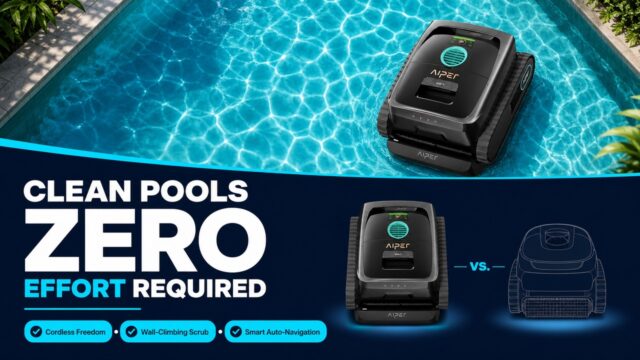
Aiper Scuba V3 Ultra AI Dual Camera Pool Cleaner
The Aiper Scuba V3 Ultra packs floor, wall, waterline, and surface skimming into one dual camera robot. Here's how the AI Patrol held up in a real pool.
As an Amazon Associate I earn from qualifying purchases.
Quick Verdict
One machine with a dual camera skims the surface, then dives to scrub the floor, walls, and waterline, and that single claim is what convinced me to test it. The all-in-one pitch is either the smartest thing about this robot or its biggest compromise. After running it, I know which.
Buy if you:
- Have a leafy pool and hate emptying a separate skimmer basket
- Want floor, wall, and waterline cleaning from one robot
- Like managing everything from a phone app instead of a hose
- Are tired of owning both a pool robot and a solar skimmer
Skip if you:
- Expect the AI Patrol to run silently in the background all day without the noise and surface movement it makes
- Only ever need floor cleaning and don’t care about skimming
- Want the cheapest possible robot with no smart features
Clicking takes you to the seller's website. We may earn a small commission if you purchase, at no extra cost to you.
The dual camera is what makes this thing different
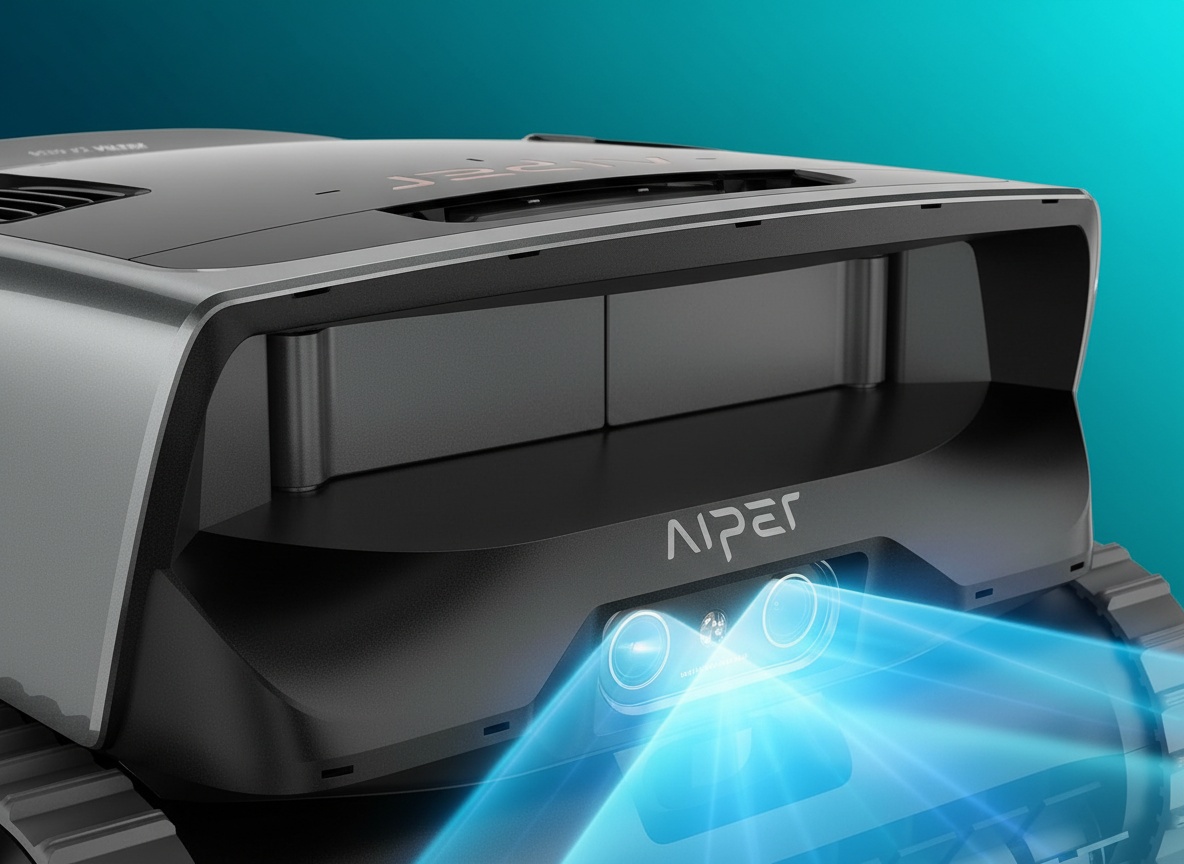
Most pool robots are blind. They bump, turn, and hope. The Aiper Scuba V3 Ultra runs a dual camera AI vision setup plus ultrasonic sensors, and that’s the feature I wanted to put through a real pool. I ran it above and below the water to see whether the “AI” label meant anything or was just a sticker. You can check the current price on Amazon here if you want to follow along.
The dual camera feeds into what Aiper calls Cognitive AI Navium mode. It reads pool conditions, weather, and past cleaning history, then picks a path. One tap and it goes. That’s the pitch anyway. The interesting part for me was watching whether it actually adjusted or just wandered like every other robot I’ve tested.
What’s packed into this scuba ultra cognitive robot
Five cleaning jobs live in one shell here: floor, walls, waterline, surface skimming, and shallow areas. That last one reaches down to 7.9 inches, so steps and shallow ends aren’t ignored. The suction is rated at 8,500 GPH from a dual-pump system, and the debris inlet is enlarged to 1.1 inches so leaves and sand get pulled in a single pass instead of being shoved around.
| Spec | Detail |
|---|---|
| Suction | 8,500 GPH dual-pump |
| Debris inlet | 1.1 in (3 cm) |
| Filtration | 180μm coarse + 3μm MicroMesh fine |
| Cleaning zones | Floor, walls, waterline, surface, shallow to 7.9 in |
| Navigation | Dual-camera AI vision + ultrasonic sensors |
| Cleaning paths | 10 adaptive modes |
| Retrieval | JellyFloat auto surface parking |
The filtration runs two stages. A 180μm layer grabs the big stuff, and a 3μm MicroMesh layer catches the fine particles that usually cloud the water. On paper that’s a wide net. The dual camera claims to recognize 20 or more debris types, which is a bold number for a pool floor.
AI Patrol and surface skimming in a real pool
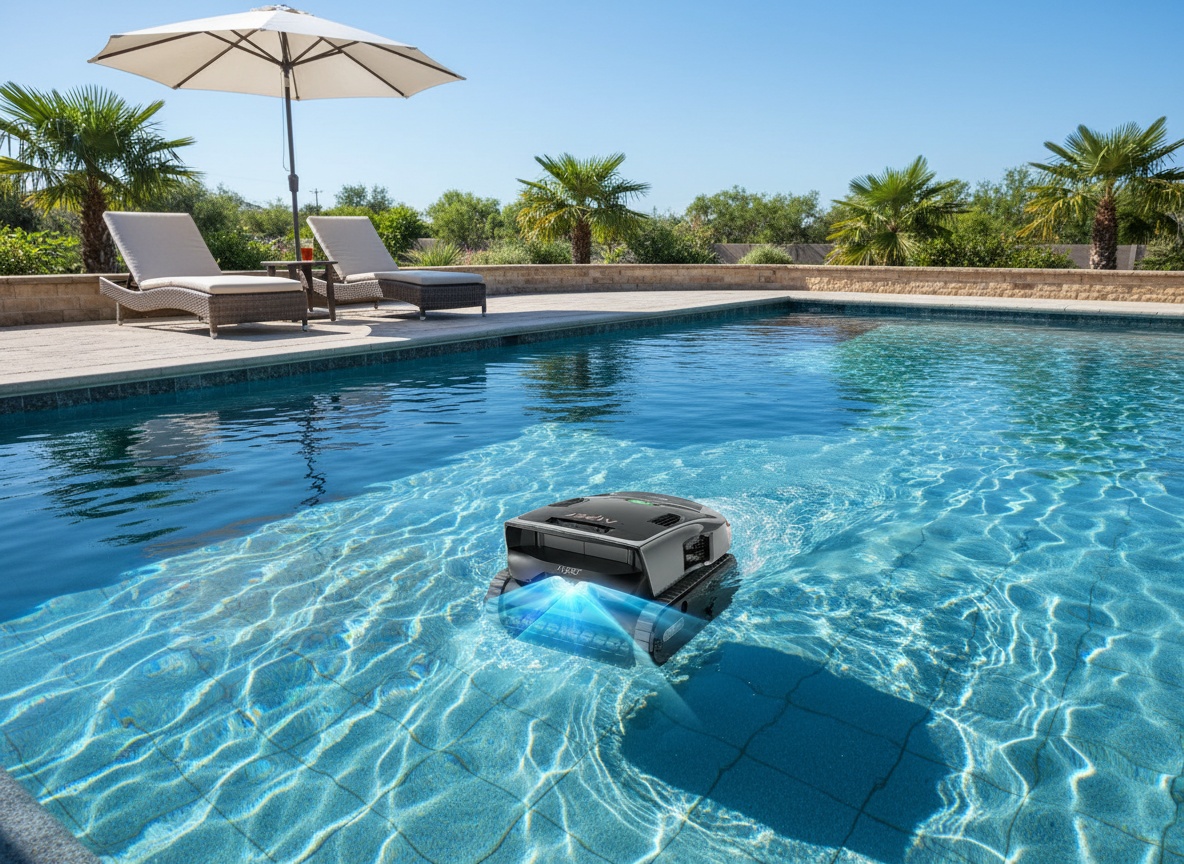
Surface skimming is the trick that surprised me most. This isn’t a robot that only crawls the floor. It rises to the top and works the surface like a solar skimmer would, pulling floating leaves before they sink and become a floor problem. The JellyFloat buoyancy engine handles the vertical movement, letting it climb, recover from obstacles, and hold steady while it skims.
AI Patrol is the mode that lets it hang out and skim on a schedule instead of doing one full clean and quitting. For a pool that collects leaves all day, that changes the math. Instead of one robot on the floor and a separate skimmer floating around, the Scuba V3 Ultra tries to be both. When the cycle ends, it rises to the surface on its own so you’re not fishing for it with a hook.
The part that caught me off guard
An all-in-one robot moves water, and moving water makes noise and ripples. When the Scuba V3 Ultra is up top running surface patrol, it’s not invisible. It’s a robot cruising your pool. If you pictured a silent floating pad that quietly sips leaves, adjust that expectation. It works, but it’s present.
The other thing worth knowing is that packing five jobs into one machine means it’s doing a lot. A dedicated floor robot and a separate skimmer each do one thing very well. This does all of them, which is the whole appeal, but it also means when it’s up skimming, it isn’t down scrubbing. You’re trading two specialists for one generalist, and that trade is the actual buying decision here.
Get it now
Aiper Scuba V3 Ultra
Get the best price on Amazon →As an Amazon Associate I earn from qualifying purchases.

Who this robotic pool cleaner and skimmer actually fits
The Scuba V3 Ultra has a specific target: the pool owner running a floor robot and a separate solar skimmer who’s sick of maintaining both. If that’s not you, if you’ve just got a floor robot and call it good, most of what this machine does sits idle and a cheaper single-purpose robot makes more sense.
Leafy yards benefit most. The surface skimming plus the 1.1 inch inlet plus the two-stage filtration are all aimed at debris-heavy pools. If your pool is under a screen enclosure and barely collects anything, a lot of this capability sits unused and a simpler floor robot might make more sense.
Against a separate robot and solar skimmer
A dedicated floor robot plus a solar skimmer will often out-specialize this on each individual task. The skimmer runs on solar and just floats there quietly all day. The floor robot does nothing but scrub. Neither has a dual camera or AI path planning, and neither talks to an app.
Where the Scuba V3 Ultra wins is the single-device life. One machine, one retrieval, one filter, one charge. If you value that simplicity over having two purpose-built tools, the all-in-one is the call. If you’d rather have two machines each nailing their one job, the split setup still holds up.
Advice before you buy
Lean into the app. The whole point of the AI modes is that you set them and let the robot decide the path, so fighting it with manual control defeats the purpose. Let AI Patrol and Navium mode run a few cycles before you judge it, since it uses cleaning history to adjust.
Empty the fine MicroMesh filter often if your pool runs dirty. A 3μm filter catching fine particles fills faster than a coarse-only basket. And set your expectation that surface patrol is an active machine on the water, not a silent floating pad. Once that lands, the all-in-one convenience is the reason to grab one at the current price.
Pros
- Dual camera AI vision plus ultrasonic sensors instead of blind bumping
- Five jobs in one: floor, walls, waterline, surface skimming, shallow areas
- Surface skimming replaces a separate solar skimmer
- 8,500 GPH suction with a wide 1.1 inch debris inlet
- JellyFloat auto surface parking means no hooking it out
Cons
- Surface patrol is an active, visible machine on the water, not a silent pad
- One generalist can’t be scrubbing the floor while it’s skimming up top
- Fine 3μm filtration means more frequent filter cleaning in dirty pools
- Overkill for a screened pool that barely collects debris
What we’d improve
A couple of things the next version could sharpen:
- Quieter surface patrol, the water movement during skimming is more noticeable than a passive solar skimmer, and dampening that would make AI Patrol feel less intrusive.
- Simpler filter access, with a 3μm fine layer filling quickly in leafy pools, faster tool-free filter removal would cut the maintenance friction.
Frequently Asked Questions
Does the Aiper Scuba V3 Ultra need an app to work?
The smart features run through the app, where you activate AI Patrol and Navium cognitive mode. You can start a one-tap clean, but the point of this robot is the app-driven AI, so you’ll want it connected to get the value.
Can it really replace both a pool robot and a solar skimmer?
Yes, that’s the whole design. It cleans the floor, walls, and waterline like a pool robot, then rises to skim the surface like a solar skimmer. The trade-off is it can’t do both at the exact same moment the way two separate machines can.
How does it get out of the pool when it’s done?
It parks itself at the surface automatically using the JellyFloat buoyancy engine. No hooks, no reaching to the bottom. It floats up so you can grab it at the edge.
What size debris can it pick up?
The 1.1 inch inlet handles leaves and larger debris, while the two-stage filter drops from 180μm coarse down to a 3μm MicroMesh fine layer for tiny particles. That range is meant to catch everything from leaves to fine sand.
Does it clean pool steps and shallow areas?
Yes, it reaches shallow areas down to 7.9 inches, so steps and shallow ends aren’t skipped. That’s one of the 10 adaptive paths it can select automatically.
How often do I have to clean the filter?
Plan on cleaning it often if your pool collects a lot of debris. The fine 3μm MicroMesh layer traps small particles, which is great for clarity but fills faster than a coarse-only basket. Rinsing it after cycles keeps suction strong.
Is the AI navigation actually different from a regular pool robot?
It uses dual cameras plus ultrasonic sensors to detect debris and plan paths, rather than the bump-and-turn logic on basic robots. In practice that means it’s reading the pool instead of guessing, and it adapts based on conditions and past cleaning history.
Will it work in an oddly shaped or large pool?
The 10 adaptive cleaning paths are built to handle different pool shapes with minimal manual input. The AI selects paths for floors, walls, waterline, and surface, so irregular layouts are what the vision system is meant for. Very large pools may need a longer run to cover everything.
Get it now
Aiper Scuba V3 Ultra
Get the best price on Amazon →As an Amazon Associate I earn from qualifying purchases.