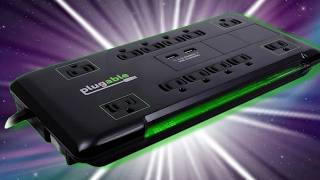
Plugable Surge Protector Power Strip: Should You Buy It?
A close look at the Plugable 12-outlet surge protector: 4320 joules, a 25ft cord, and who it actually suits.
As an Amazon Associate I earn from qualifying purchases.
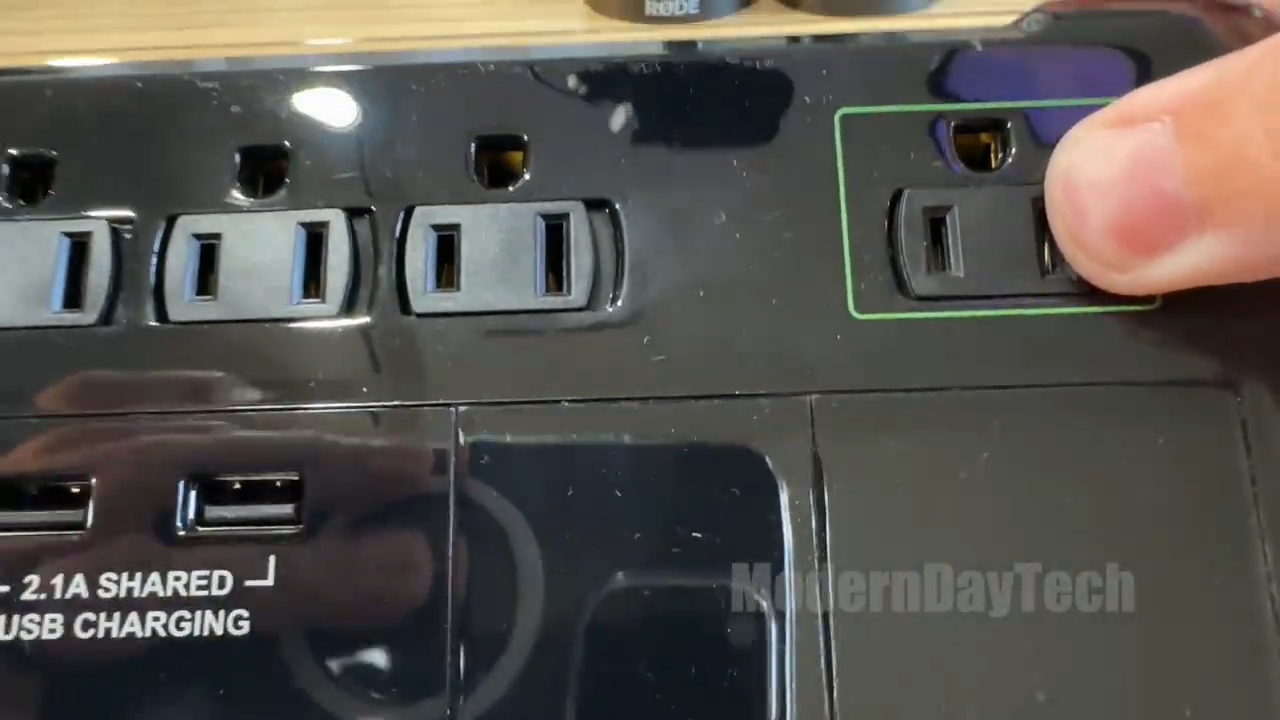
The number that matters on the Plugable Surge Protector Power Strip is four. That’s how many extra-wide outlets it gives you, and if you’ve ever tried to hang three power bricks off a cheap strip, you know why that’s the spec worth paying for. Twelve outlets is meaningless if a monitor adapter eats two of them. Four wide bays plus eight standard ones is a better layout than most strips twice this length.
Quick Verdict
Four extra-wide outlets and a 25ft cord are the whole pitch here, and they’re the two things most desk strips get wrong. 4320 joules is serious protection.
| Outlets | 12 AC, four extra-wide spaced |
|---|---|
| USB | 2x USB-A charging ports |
| Surge rating | 4320 joules, EMI/RFI filter |
| Cord | 25 ft extension cable |
| Load capacity | Up to 15A combined |
| Mounting | 4x wall-mount screw slots, UL/cUL rated |
Twelve Outlets Is Not the Interesting Number
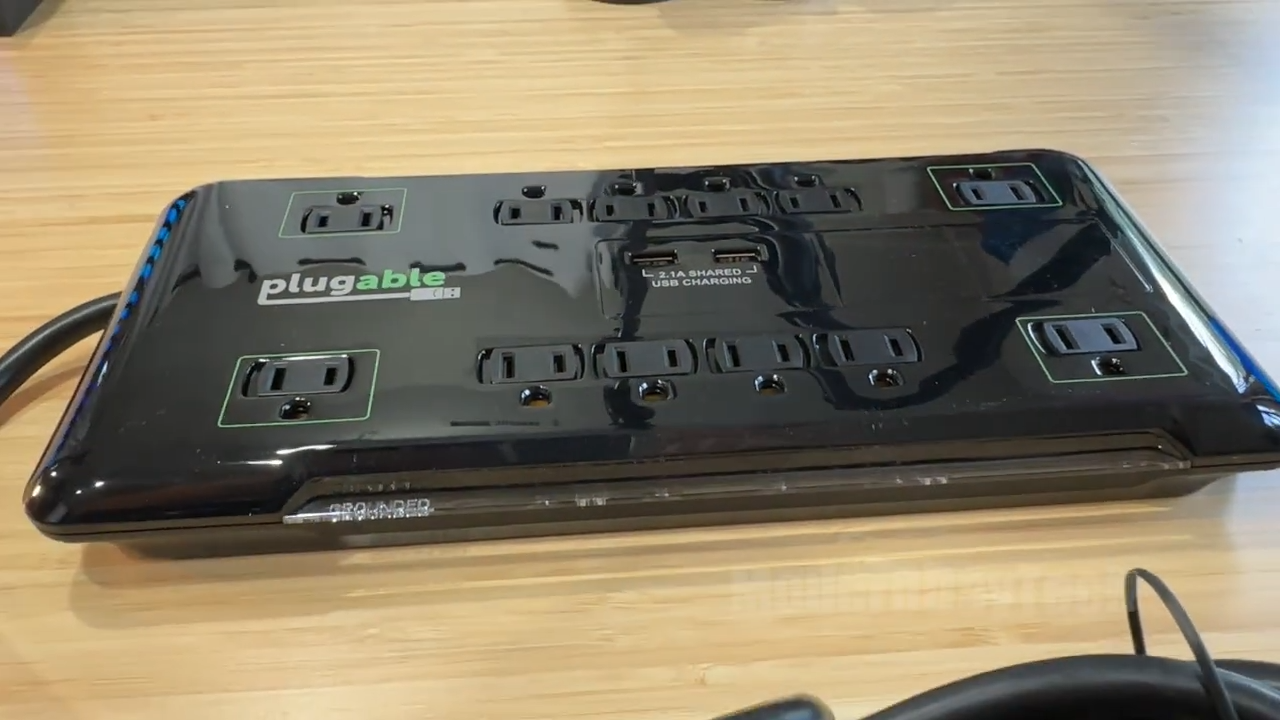
The second number is 25 feet of cord. That’s unusual for a surge protector in this class, and it’s the reason this thing keeps showing up in desk-setup conversations.
Where This Surge Protector Sits Against the Usual Names
Belkin and Tripp Lite own the brand-recognition search, but neither ships a 25ft cord with four wide-spaced outlets at this joule rating. Plugable is a dock-and-hub company, and that lineage shows: the outlet layout and cord length suggest someone designed this after watching an IT department run cable under raised floors, not after browsing the big-box aisle.
The 4320 joule rating puts it in the upper tier. Plenty of budget strips advertise 1000 to 1500 joules, which is enough for a lamp and not much else. Joules are a consumable budget, each surge eats some of it, so a higher rating is mostly a longevity claim. Pair that with the UL/cUL listing and an EMI/RFI filter and the safety side is credibly covered. What actually surprised me is the lifetime support from a North American team, most strips in this price range offer a one-year warranty and a toll-free number that goes nowhere.
15A Shared Is the Ceiling Everyone Forgets
Everything you plug in shares 15 amps total. Not 15A per outlet. That’s roughly 1800 watts at standard US voltage, and it’s the single most important line in the spec sheet because twelve outlets invites you to treat this like unlimited power.
For a desk, you’re fine. A gaming PC, two or three monitors, a couple of external hard drives, a router, speakers, a phone charger, a desk lamp. All of that together doesn’t get close to the ceiling. The trouble starts when someone adds a portable heater under the desk in winter, or a laser printer that spikes hard on warm-up. That’s when the 2-in-1 power and circuit breaker switch earns its keep, and also when you’ll be annoyed that it tripped.
The two USB-A ports are the dated part. USB-A charging is fine for a wireless mouse, a headset, a keyboard. It won’t fast-charge a modern phone and it definitely won’t touch a laptop. In a product otherwise built for current desk setups, that’s the spec that shows its age. If USB-C charging matters to you, you’ll end up plugging a separate brick into one of those wide outlets anyway, which is a slightly silly outcome.
The mounting story is better. Four screw slots mean this can live under a desk instead of tangled on the floor, and with a standing desk that matters more than it sounds, because a strip that’s mounted to the desk rises with the desk instead of yanking on the cord. Cable clips or heavy-duty mounting tape get you there without drilling.
The 25 Foot Cord Cuts Both Ways
The 25ft cord solves one problem and creates another: you get reach, but storing the excess requires planning. It’s the right call if your only outlet is across the room, and it’s overkill if the wall is three feet behind your desk. There’s no elegant way to store the excess, so expect to buy a cable wrap or spend an evening coiling it behind a bookshelf. Nobody sells a 25ft cord that hides itself.
One more thing worth checking before you buy: the price on this one moves around a lot. It’s sitting at about its normal three-month level right now, but it has been considerably cheaper at points, so the current price is worth a look rather than an assumption. Sales are also picking up, it’s climbed to #40,198 in Electronics against a 90-day average of #46,558.
Who Should Skip This Entirely
If you need battery backup, this isn’t it. A surge protector cuts spikes, it doesn’t keep your PC alive during an outage. Anyone running a home server or editing on a desktop with unsaved work wants a UPS instead, and a strip like this behind it.
This is for the person with a cluttered desk, too many bricks, and a wall outlet in an inconvenient place, and the 25ft cord plus four wide-spaced outlets solve both problems without any creative cable management. If that’s your setup, buy it. If you need USB-C charging or battery backup, look elsewhere first.
Frequently Asked Questions
Can I plug a surge protector into an extension cord or another strip?
No, daisy-chaining strips is a fire risk and voids most warranties. The 25ft cord on this one exists specifically so you don’t have to. Run it straight to a wall outlet.
How do I know when a surge protector needs replacing?
Watch the protection and grounding indicator lights. Once the protection light goes out, the joule budget is spent and it’s a plain power strip from that point on. A big single surge can end it, or years of small ones can wear it down.
Does it need an app or any software?
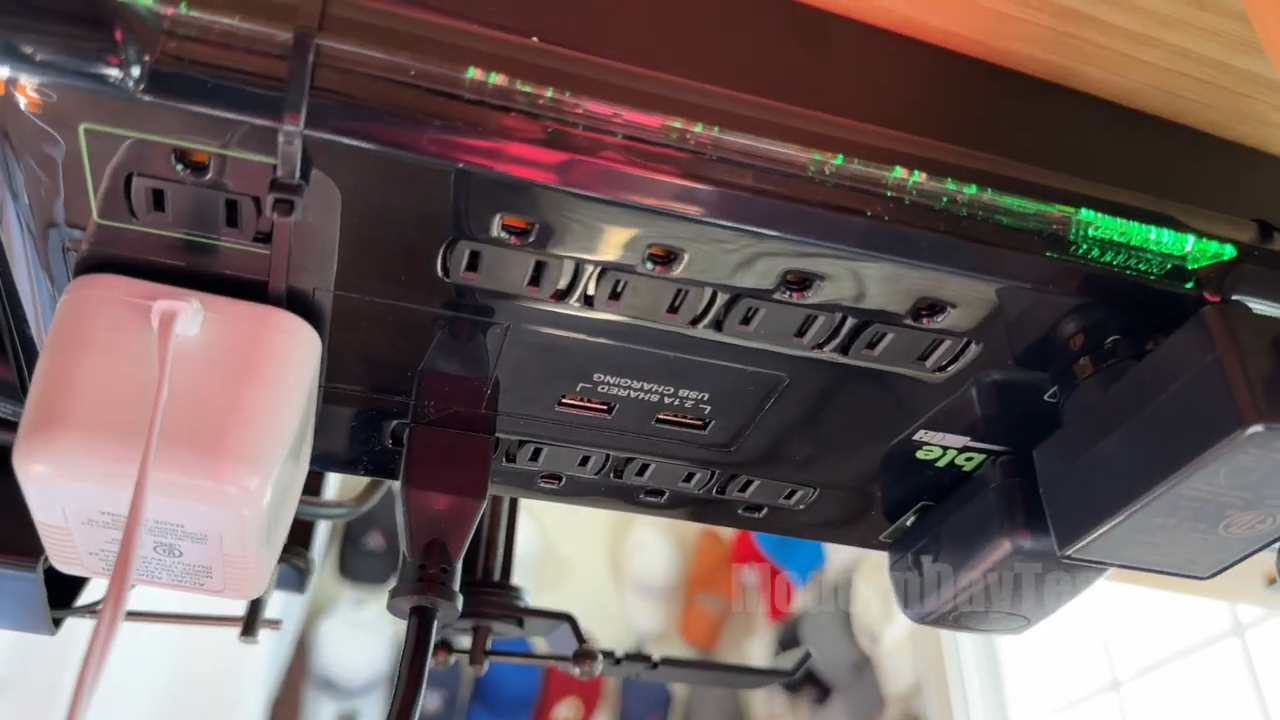
None. It’s a passive device with a physical power and circuit breaker switch. Nothing to pair, no account, no firmware.
Clicking takes you to Amazon. As an Amazon Associate we earn from qualifying purchases — pricing and availability subject to change.
Get it now
Plugable Surge Protector Power Strip
Get the best price on Amazon →Affiliate link. See the disclosure at the top of this post.