Milwaukee M18 FUEL 2.5 Gallon Wet/Dry Vacuum Review: Is It Worth It for Homeowners?
I tested the Milwaukee M18 FUEL Packout Wet/Dry Vacuum to see if the Packout integration and cordless performance justify the price for homeowners.
As an Amazon Associate I earn from qualifying purchases. This post contains affiliate links. I may earn a commission at no extra cost to you.
Quick Verdict
The Milwaukee M18 FUEL Packout Wet/Dry Vacuum is a legitimately capable cordless shop vac, and the PACKOUT compatibility is the main reason I chose it over everything else on the shelf. It handles both wet and dry messes well, doubles as a blower, and runs on the same M18 batteries I already own. The heavier weight and external hose storage design are real trade-offs you should know about before buying.
Buy if you:
- Already own Milwaukee M18 batteries and tools
- Use the PACKOUT modular storage system and want seamless integration
- Need a vacuum that handles both wet spills and dry debris on the same job
- Work in occupied spaces where a quieter vac matters
Skip if you:
- Don’t own M18 batteries and don’t want to invest in them separately
- Need a lightweight vac you can carry around single-handed all day
- Want hose storage built cleanly into the unit itself
Clicking takes you to Amazon. As an Amazon Associate we earn from qualifying purchases — pricing and availability subject to change.
Why I Ditched My Old Shop Vac for This One
I’ve owned a pretty standard corded shop vac for years. It worked fine. But every time I needed to move it around the garage, haul it out to the driveway, or bring it up to the second floor for a quick cleanup, it was a whole ordeal. The hose was tangled, the cord was never long enough, and the thing just sat on the floor taking up space it didn’t earn. That’s the context that got me looking at the Milwaukee M18 FUEL Packout Wet/Dry Vacuum in the first place.
And look, I’ll be straight with you: this isn’t the cheapest wet/dry vac you’ll find. The tool alone runs well above what a basic big-box shop vac costs, and the M18 battery it needs isn’t included. So right out of the gate, there’s a real conversation to be had about whether the premium is worth it. That’s what I set out to figure out.
The short version: if you’re already in the Milwaukee M18 ecosystem and you use the PACKOUT storage system, this thing makes a lot of sense. If you’re coming in cold with no Milwaukee batteries and no PACKOUT setup, the math gets a lot harder. But let’s break it all down properly.
The Specs That Made Me Pay Attention
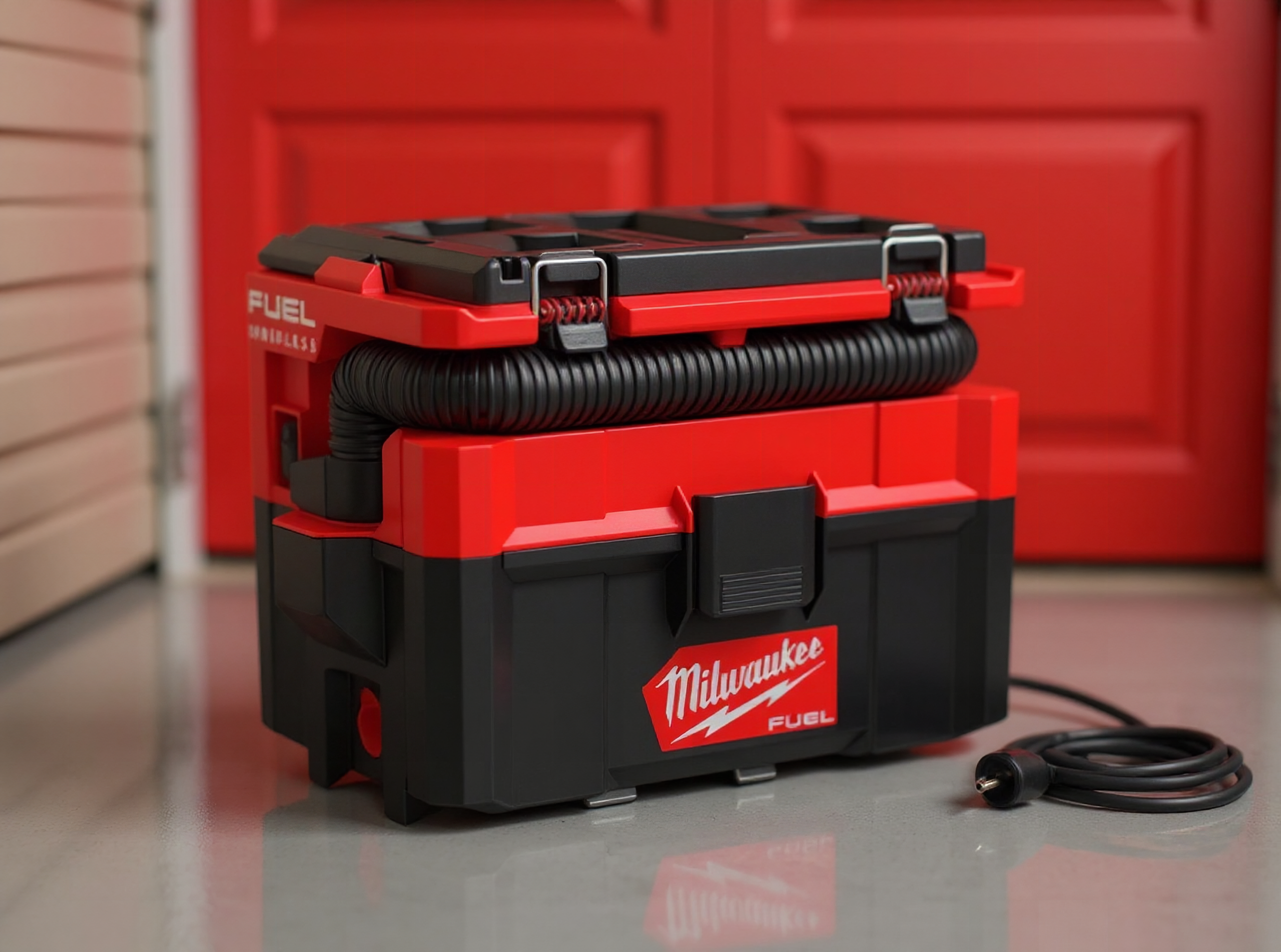
This is the Milwaukee M18 FUEL Packout Wet/Dry Vacuum, model 0970-20. The FUEL designation matters here — that means it’s running a POWERSTATE brushless motor, which Milwaukee claims delivers up to 60% more suction than a standard 18V vacuum. The numbers back that up: 50 CFM airflow and 47 inches of water lift. For a cordless 2.5-gallon vac, those are genuinely solid specs.
The tank holds 2.5 gallons, which is enough for most household and workshop cleanups without constantly stopping to empty it. There’s a 6-foot flexible hose with a 1.5-inch diameter, so you’re not crawling around with a stubby little nozzle. Included in the box: that hose, a HEPA filter, a crevice tool, a utility nozzle, and a vacuum power tool adapter for direct dust collection at a tool.
Two speed settings: High and Low. With an 8.0Ah High Output battery, you’re looking at up to 30 minutes on High or over 50 minutes on Low. That runtime window is realistic for most homeowner tasks — a garage cleanout, post-project debris, a flooded utility room situation. The unit weighs about 12 lbs without the battery, and the body measures 17.1 inches wide by 10.5 inches deep by 12.8 inches tall.
One spec that doesn’t usually get talked about: noise. Milwaukee claims this runs at 87 dBA, which they’re marketing as 2x quieter than a traditional wet/dry vac. I’ll circle back to that when I talk about real-world use, but the number is notable. Traditional shop vacs are obnoxiously loud. This being genuinely quieter matters in certain situations.
The unit is also OSHA-compliant for specific silica dust-producing applications when paired with the HEPA filter, which matters if you’re cutting concrete, tile, or doing any demo work. That’s a professional-grade spec that you don’t normally see pitched to homeowners.
Wet Messes, Dry Debris, and the Blower Port
Let’s talk about what this thing can do on a real job. The wet/dry capability is straightforward — you can pull water off a floor or suck up sawdust from a surface, and you’re switching between those jobs without swapping out major components. The HEPA filter handles fine dry particles well, and the 2.5-gallon tank is the right size for most home situations. It’s not so big that it becomes a hassle to empty, and it’s not so small that you’re stopping every 60 seconds.
The blower function is one of those features that sounds minor until you actually use it. You just move the hose from the suction port to the blower port and you’ve turned this thing into an air mover. That’s useful in a garage, on a deck, anywhere you’ve got debris you want to push instead of pull. Most people don’t buy a vac specifically for the blower, but having it there without needing a separate tool is a small win.
Suction performance on High mode is noticeably strong. The 50 CFM and 47-inch water lift specs translate to the kind of pull you feel when you lay the nozzle down on a surface — it grabs things. Low mode is more than enough for light dust and incidental debris, and the runtime trade-off makes Low a smart default when you’re doing a longer cleanup session.
The 87 dBA noise level is worth acknowledging in context. Most shop vacs run closer to 95–100 dBA. That’s not a small difference — every 10 dB roughly doubles perceived loudness. Running this inside the house near a sleeping kid or in a finished basement space feels a lot less intrusive than firing up a standard shop vac. I wasn’t expecting that to matter as much as it does in practice.
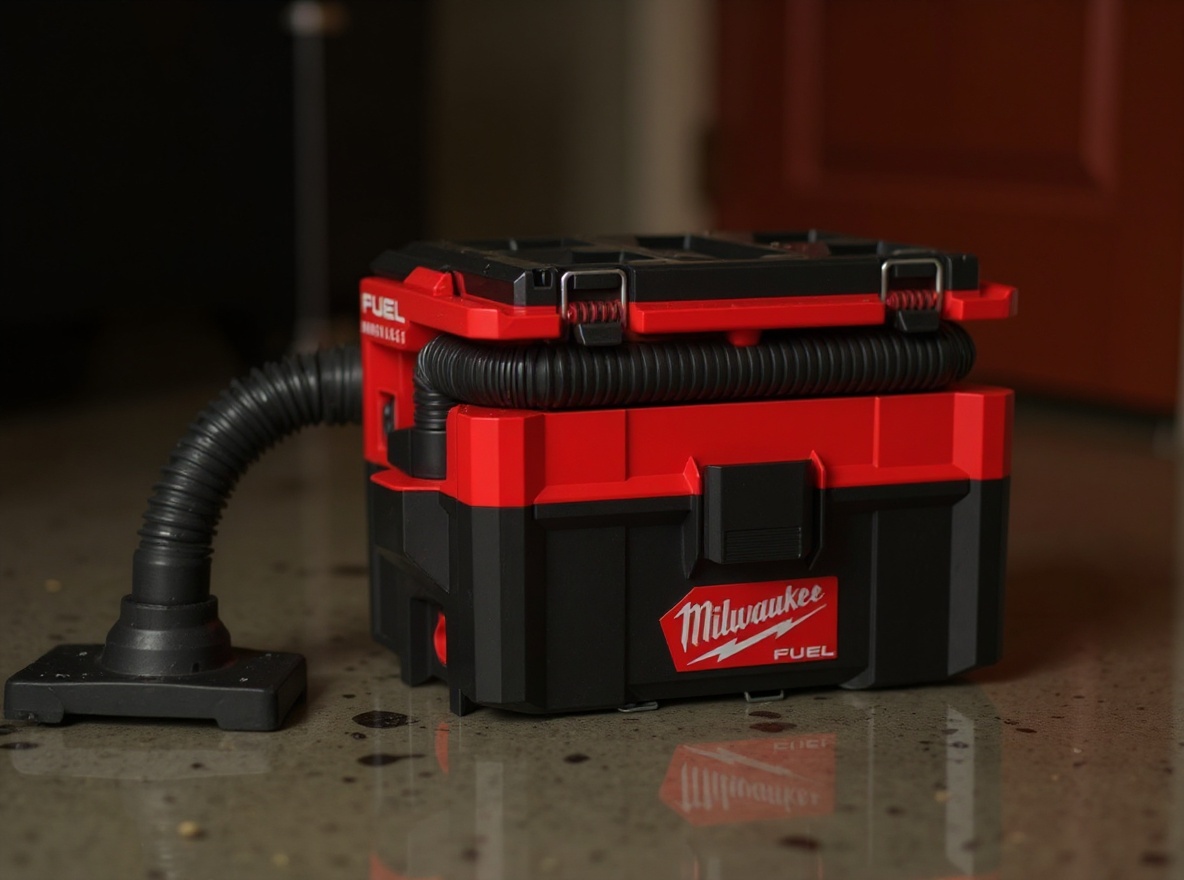
Where I have some reservations: the hose situation. It’s a 6-foot hose and there’s no clean integrated storage for it on the unit. You’re wrapping it around the outside or stashing it separately. That’s annoying. It’s not a dealbreaker, but it’s the kind of design decision that nags at you every time you pack up after a cleanup session.
The PACKOUT Integration Is the Whole Point
This is the thing most shop vac reviews completely skip over, and it’s the primary reason I chose this over a cheaper corded option.
The Milwaukee PACKOUT system is a modular storage platform. Boxes, bags, organizers, rolling towers — they all click together with a locking mechanism that holds even when you’re moving things around aggressively. The Packout Wet/Dry Vacuum has special slats built into the top and bottom of the housing that let it integrate directly into that system. It stacks onto PACKOUT boxes. It fits inside the rolling tool tower. You can build a setup where your vac, your tools, and your accessories all travel as one organized unit.
For someone who moves between job sites, or just between different parts of their property, that changes how this tool fits into your workflow. I used to grab the vac as a separate trip. Now it’s part of the cart. It comes along without thinking about it. That’s the kind of friction removal that sounds trivial until you’ve lived with it for a few weeks.
If you don’t own any PACKOUT gear, this benefit means nothing to you right now. But if you’re thinking about building that system out, starting with a vac that’s native to it is smarter than buying a standalone vac today and trying to figure out how to retrofit it into a PACKOUT setup later.
Get it now
Milwaukee Packout Wet/Dry Vacuum
Check Current Price on AmazonAs an Amazon Associate I earn from qualifying purchases. This post contains affiliate links. I may earn a commission at no extra cost to you.
This Vacuum Has a Pretty Specific Audience
Here’s the thing about the Milwaukee Packout Vac: it rewards people who are already invested in a particular ecosystem. If you’ve got M18 batteries on your charger right now — a drill, a circular saw, a reciprocating saw, anything — you already have the power source for this vacuum. That’s a significant thing. You’re not buying the tool AND the battery; you’re adding the tool to a battery platform you already own.
That makes this a realistic buy for:
The active homeowner who does their own projects. Weekend deck builds, finishing a basement, tile work in a bathroom. These are the people who generate real debris and real messes, need a vac that travels easily to where the work is happening, and don’t want to be dragging a 20-pound corded machine up a flight of stairs.
Contractors and trade workers already on M18. The OSHA silica dust compliance is a real feature for anyone doing demo, masonry, or tile cutting. The quieter operation matters on job sites in occupied buildings. And the PACKOUT integration means this can live in a jobsite kit without being an orphaned piece of gear.
PACKOUT collectors. There’s a whole community of people who’ve built their entire tool storage setup around the PACKOUT system. For them, a wet/dry vac that natively integrates is basically a no-brainer purchase.
Who it’s not for: someone who just needs a cheap vac for the garage. If you want to suck up some drywall dust once a month and don’t care about portability or system integration, a corded big-box shop vac gets the job done for a fraction of the investment. The Milwaukee isn’t a budget tool and it’s not trying to be.
Milwaukee vs. a Standard Corded Shop Vac
This is the comparison that most people are running in their heads when they look at this vacuum, so let’s just put it on the table.
A standard corded shop vac — something from Ridgid, Craftsman, or the house brand at your local hardware store — will give you more tank capacity, typically longer cord reach than battery runtime allows, and a lower upfront cost. That’s the trade-off. You’re not buying the Milwaukee because it beats a corded vac on raw specifications in every category.
You’re buying it because of what cord-free operation actually means in practice. No hunting for an outlet. No tripping over a cord while you’re moving around the garage. No extension cord running across a job site. And especially for PACKOUT users, no piece of gear that doesn’t fit the system.
The POWERSTATE brushless motor and the 50 CFM / 47-inch water lift numbers mean this isn’t a compromise vacuum, either. It’s not a tool that’s cordless at the cost of being weak. Milwaukee built this to perform, and from the specs they’re publishing, it delivers. The performance gap between this and a mid-tier corded shop vac is smaller than you’d expect going in.
Weight is where it loses ground. At about 12 lbs before the battery, and then adding 2–3 lbs depending on your M18 battery size, you’re carrying a heavier unit than a basic corded vac of similar capacity. That matters if you’re moving it constantly. For a stationary garage setup where it sits in one place and you wheel the PACKOUT cart around, it matters a lot less.
The hose storage issue I mentioned earlier shows up here too. A lot of corded shop vacs have integrated hose and cord wraps built into the body. This one doesn’t. Milwaukee’s trade-off there feels like they prioritized the PACKOUT integration and clean external silhouette over wrapping hose storage into the housing. That’s a defensible design call, but it’s still a trade-off.
A Few Things to Know Before You Order
The battery situation deserves its own paragraph. The 0970-20 is a tool-only purchase — no battery in the box. Milwaukee recommends an 8.0Ah High Output battery to get the most out of runtime, and that battery is a separate buy. Factor that into your total cost calculation before you compare sticker prices. If you already own a compatible M18 battery, great. If you’re starting from zero, the real cost of getting this vac running is higher than the tool-only price suggests.
The speed modes matter more than they sound. High mode gives you serious suction and burns through the battery faster. Low mode extends runtime to 50-plus minutes and is still more than capable for standard debris cleanup. Get in the habit of using Low as your default and switching to High only when you actually need the extra pull. Your runtime will thank you.
The HEPA filter is included and it’s a good one — certified for fine dust and microparticles. If you’re using this for silica dust applications or any kind of fine material, don’t swap it out for a generic filter. The HEPA is there for a reason and it’s doing real work.
And the hose. Just figure out where you’re storing it before you bring this home. The vacuum body doesn’t accommodate it neatly, so if you’re keeping this on a shelf or inside a PACKOUT tower, you need a plan for where the hose lives. It’s not a complicated problem, but it’s a real one and it catches people off guard.
One last thing: the 1-1/4-inch inlet is on the smaller side compared to larger shop vacs that run 2.5-inch inlets. For most homeowner tasks it’s fine. For heavy debris or bulkier material, the size of that inlet is a real factor in how fast you can work.
Frequently Asked Questions
Does the Milwaukee Packout Vacuum come with a battery?
No, the 0970-20 is a tool-only purchase and does not include a battery. You’ll need a Milwaukee M18 battery separately. Milwaukee recommends an 8.0Ah High Output battery for best performance and runtime.
How long does the battery last on a single charge?
With an 8.0Ah High Output M18 battery, you get up to 30 minutes on High speed and over 50 minutes on Low. For most household cleanup tasks, Low mode runtime is more than sufficient and it’s the smarter default to preserve your battery.
Can it actually pick up water, or is the wet function just for light spills?
It’s a genuine wet/dry vacuum with a 2.5-gallon tank, not just a “splash-resistant” marketing claim. It can handle standing water, spills, and wet debris. Just make sure you’re using it correctly with the appropriate filter configuration for wet pickup.
Does the Packout vacuum actually stack with other Packout boxes?
Yes, that’s one of its core features. The housing has slats built into the top and bottom specifically for PACKOUT integration, so it stacks with PACKOUT boxes and fits into the signature PACKOUT rolling tool towers. It’s designed to be a native part of that system, not an afterthought.
Is it noticeably quieter than a regular shop vac?
At 87 dBA, it’s genuinely quieter than most traditional shop vacs that run at 95–100 dBA. That might not sound like much on paper, but in practice it’s the difference between a vac you can run in a finished space without everyone noticing and one that sounds like a small jet engine.
Related reviews
- Giraffe Tools 100ft Garden Hose Review: Kink Resistant or Just Marketing?
- MEATER Pro XL Review: Is This the Best Smart Meat Thermometer for Grilling & Smoking?
- ThirdReality Zigbee Smart Watering Kit Review: Hands-Free Plant Care for Your Smart Home
What’s the blower function actually useful for?
You move the hose from the suction port to the blower port and the vacuum pushes air instead of pulling it. It’s useful for clearing debris off a deck, blowing dust out of a workshop corner, or moving light material you don’t want to vacuum. It’s a simple switch and adds a practical use case without any extra hardware.
Get it now
Milwaukee Packout Wet/Dry Vacuum
Check Current Price on AmazonAs an Amazon Associate I earn from qualifying purchases. This post contains affiliate links. I may earn a commission at no extra cost to you.