Fanttik E1 Max Electric Precision Screwdriver Review
Two weeks with the Fanttik E1 Max electric precision screwdriver on phones, electronics, and a stubborn outlet screw. Here's where it shines and where it stalls.
As an Amazon Associate I earn from qualifying purchases.
Quick Verdict
Two weeks of phone teardowns and one stubborn outlet screw later, the Fanttik E1 Max earned a spot on my bench. The 50 bits and the LED ring carry it. The 200 RPM motor is built for small screws, not muscle, and you’ll feel that the second you ask it to fight something tight.
Buy if you:
- Crack open phones, drones, laptops, or a Steam Deck regularly
- Want one pen-sized driver instead of a drawer of tiny screwdrivers
- Work in dark cases where the built-in LED ring earns its keep
- Like everything stored in one magnetic case you can grab and go
Skip if you:
- Hit a genuinely stuck screw and expect the motor to break it loose, it won’t, you’ll switch to manual mode
- Need it for cabinets, decks, or anything bigger than precision repair
- Want fast driving, 200 RPM is deliberately slow
Clicking takes you to Amazon. As an Amazon Associate we earn from qualifying purchases — pricing and availability subject to change.
| Dimensions | 7.09 × 1.77 × 1.77 in |
|---|---|
| Motor speed | 200 RPM |
| Torque | 0.05 / 0.2 Nm electric, 3 Nm manual |
| Battery | 350mAh, USB Type-C |
| Bits | 50 bits, 12 types, S2 steel |
| Build | Grey aluminum alloy + plastic |
Electric Precision Screwdriver: The Ultimate Outlet Test
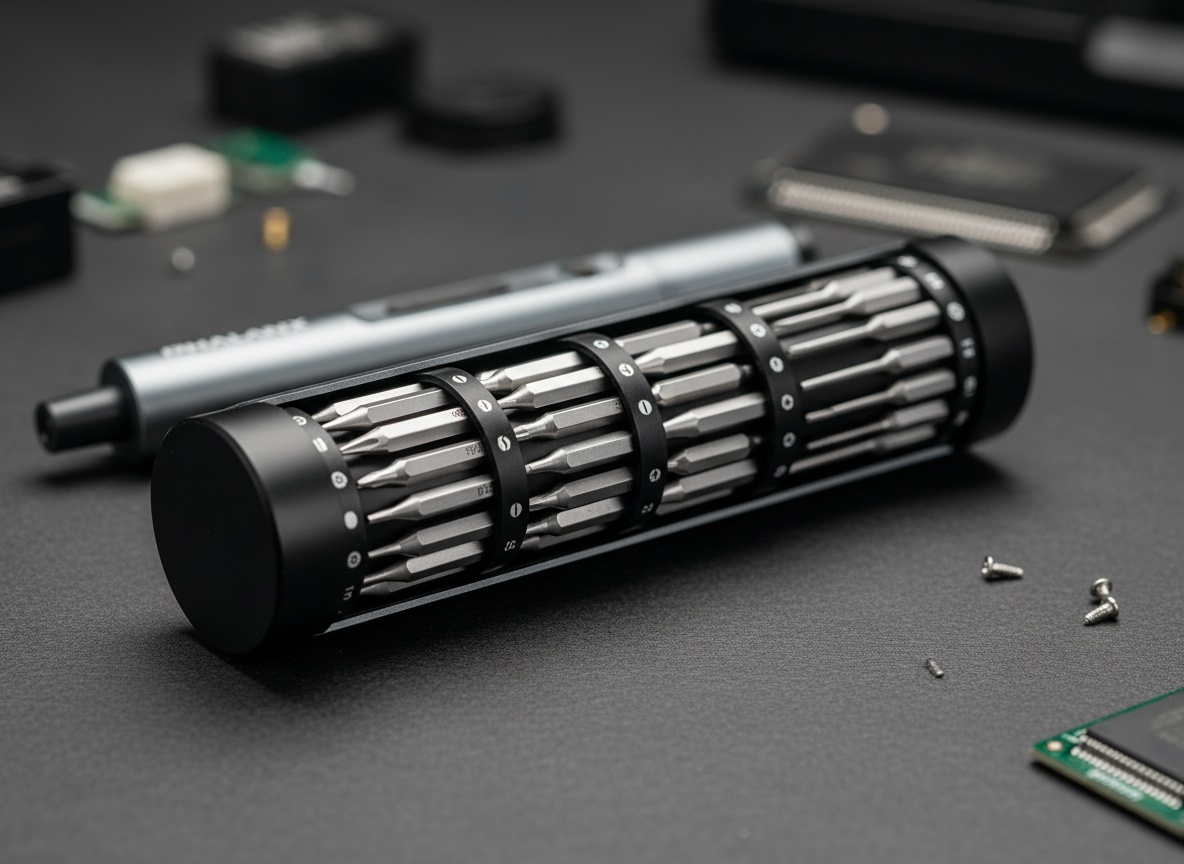
I pointed this thing at a stubborn screw inside an outlet, and that one moment summed up the whole tool. On the high torque setting the motor spun, hesitated, and basically said “nope.” So I twisted the knob to lock, used it as a manual driver, and broke the screw loose by hand. Once it was cracked, the motor took over and zipped it the rest of the way. That’s the Fanttik E1 Max in a sentence: it’s a precision electronics driver wearing the body of something that looks tougher than it is. I’ve been running it for a couple weeks now across phone repairs, small electronics, and little DIY jobs, and you can grab the current price on the Amazon listing here.
What’s Inside the Grey Aluminum Pen
It’s a 200 RPM rechargeable driver in a slim 7.09 inch aluminum body, and the spec sheet is built around small screws. You get two electric torque modes, a low 0.05 Nm and a high 0.2 Nm, switched on a rotary knob near the top. Twist that same knob to the LOCK position and the gearbox locks up so you can drive by hand at a stronger 3 Nm, which is exactly what saved me on the outlet screw.
The 350mAh battery charges over USB Type-C, and Fanttik rates it for over 450 M2.5×5mm screws on a full charge. I never came close to draining it in normal use across two weeks. The kit ships with 50 bits across 12 types in S2 steel, and both the chuck and the bits are magnetic, so a fastener won’t drop into the guts of a phone while you’re fishing it out.
Where It Shines: Tiny Screws and Dark Cases
Phone repairs are where this driver makes sense. The 200 RPM speed that feels weak on a stuck screw is exactly right for backing out a dozen identical micro screws without overshooting and stripping them. I cracked open a phone, dropped to the low 0.05 Nm setting, and let the motor walk every screw out in a steady rhythm while my thumb stayed off the cramp it used to get with a manual precision driver.
The LED ring around the tip is the feature I didn’t think I’d care about and now won’t give up. Working inside a laptop or behind an outlet plate, the shadow your own hand throws is the real enemy, and the light kills it. The magnetic tip also means I’m not chasing screws across the bench. Drop a bit near the chuck and it snaps on. That sounds small until you’ve lost a 1.2mm screw into carpet.
The Motor Taps Out On Anything Stubborn
Here’s what the box won’t say: the electric torque caps at 0.2 Nm, and that’s not enough to break a screw that’s been torqued tight or locked with age. The outlet screw proved it. The motor whirred, the screw didn’t budge, and I had to twist the knob to lock and crack it loose by hand at the 3 Nm manual setting first. Only then would the motor finish the job.
Call it a design choice if you want, but 0.2 Nm is still 0.2 Nm. Any screw that’s been torqued to spec or seized with age will shrug it off, and the outlet screw wasn’t even that stubborn. The manual lock mode at 3 Nm is the real answer, it’s just worth knowing before you buy that you’ll be reaching for it more than the spec sheet implies.
Get it now
Fanttik E1 Max Precision Screwdriver
Get the best price on Amazon →As an Amazon Associate I earn from qualifying purchases.

Who This Is Actually For
The Fanttik E1 Max has one clear home: the repair pile. If you’re the person friends text photos of cracked iPhones to, or you’ve got a Steam Deck teardown on the calendar, the 50-bit spread and the LED ring are doing real work for you from the first session. The 50-bit, 12-type spread covers the weird proprietary screws those devices love to hide behind, and the magnetic case keeps the whole kit in one grab-and-go block instead of scattered across a drawer.
It also makes a strong gift for the gadget person who keeps borrowing your manual precision set, the magnetic case and 50-bit spread look the part and are actually useful. Just don’t hand it to someone who wants to assemble an IKEA wardrobe or hang cabinet doors. The 0.2 Nm electric torque ceiling exists for a reason, and the reason isn’t drywall screws.
Advice Before You Buy
Charge it before your first project. It ships with some juice but you don’t want it dying mid-teardown with the screen half off. Learn the knob layout on day one too: low, high, and lock. The lock position is the one people forget exists, and it’s the most useful when a screw won’t move. Treat it as your manual override and you’ll stop cursing the motor for being weak.
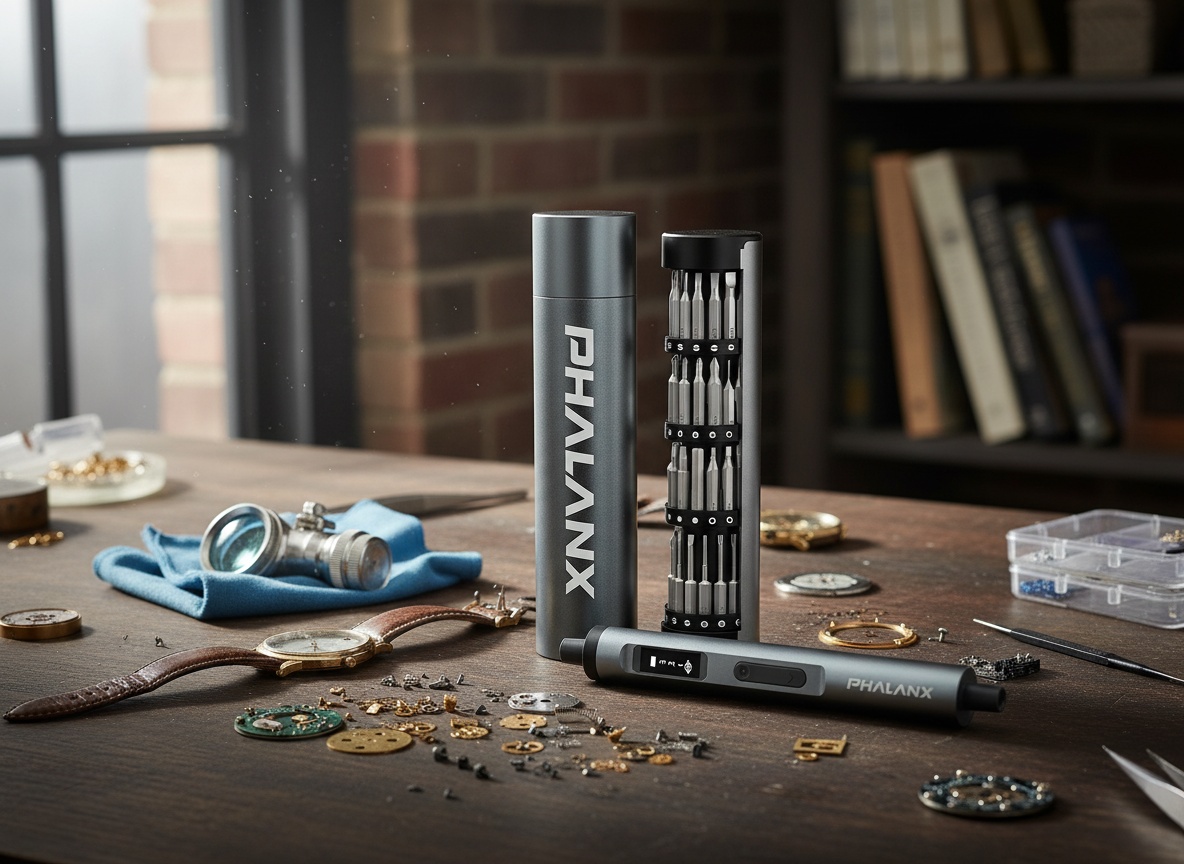
One more tip. Keep the magnetic case shut when you’re not in it. Those 50 bits look organized in the photos, and they are, but knock the open case off a bench and you’ll be sorting tiny S2 steel bits off the floor for ten minutes. The pop-up lid is satisfying for a reason. Use it.
Pros
- 50 bits across 12 types covers almost every device screw you’ll hit
- Built-in LED ring kills shadow inside dark cases and outlets
- Magnetic chuck and bits stop tiny screws from disappearing
- 200 RPM is slow on purpose, ideal for not stripping micro screws
- Aluminum body and the magnetic pop-up case feel like a quality kit
Cons
- 0.2 Nm electric torque won’t break a stuck screw, you switch to manual
- Strictly precision use, no good for furniture or general home jobs
- The driving speed feels slow if you’re used to a full-size power driver
What we’d improve
Two things the next version could fix without much trouble:
- A nudge more electric torque, even bumping the high mode slightly past 0.2 Nm would cut down how often you drop into manual lock for tighter screws.
- A battery indicator you can read at a glance, knowing exactly where the 350mAh charge sits before a teardown would beat guessing.
Frequently Asked Questions
How does it charge and how long does a charge last?
It charges over USB Type-C with the same cable your phone or laptop probably uses. The 350mAh battery is rated for over 450 M2.5×5mm screws per charge, so for typical repair sessions you’re charging it occasionally, not constantly.
Can it open an iPhone or a Steam Deck?
Yes. Phones, drones, laptops, the Steam Deck, and watches are exactly the gear it’s built for. The 12 bit types cover the proprietary fasteners those devices use, so you’re not hunting for a separate set.
Are replacement bits easy to find?
The kit includes 50 bits in S2 steel out of the box, so you’re well stocked from day one. Precision bits in these common sizes are widely available, and the magnetic chuck takes standard precision bits if you ever need a specialty one.
Will it strip small screws like a regular drill might?
It’s far less likely to. The 200 RPM speed and the low 0.05 Nm torque mode are designed to walk delicate screws out slowly without cam-out. That gentle speed is the whole point of a precision driver over a power tool.
What happens when I hit a screw the motor can’t move?
Twist the knob to the LOCK position and the gearbox locks so you can drive by hand at a stronger 3 Nm. Crack the screw loose manually, then let the motor finish. That manual override is how you handle anything the electric torque won’t budge.
Is it good for general home DIY like shelves and furniture?
No, and it isn’t meant to be. The compatibility is precision instruments only. For furniture assembly, decking, or wall anchors you want a proper power driver with real torque. Keep this one for electronics and small repairs.
Does the LED light stay on while driving?
The LED ring sits around the tip and lights the work area while you’re using it, which is the part that matters inside dark laptop and outlet cavities. It’s one of the features that actually changed how I work in tight spaces.
How portable is it for carrying around?
Very. At 7.09 inches in an aluminum body, the driver and all 50 bits live in one magnetic case that snaps shut. It’s a single grab-and-go block, so it travels far better than a loose tray of precision screwdrivers.
Are the bits and chuck both magnetic?
Yes, both. A bit snaps onto the chuck easily, and the magnetized tip holds the screw so it won’t drop into the device you’re repairing. For micro screws that’s less a convenience and more a necessity.
Get it now
Fanttik E1 Max Precision Screwdriver
Get the best price on Amazon →As an Amazon Associate I earn from qualifying purchases.