Desloc V150 Plus Solar Smart Lock Review
Two months testing the Desloc V150 Plus solar smart lock through hats, sunglasses, and cloudy weather. Here's what the solar panel really does.
As an Amazon Associate I earn from qualifying purchases.
Quick Verdict
Two months on my front door, through cloudy weeks, hats, and sunglasses, and I never once had to charge it. The perovskite solar panel is the reason to buy this lock, and it’s also where the compromises hide.
Buy if you:
- Hate remembering to recharge a smart lock battery
- Want face unlock plus fingerprint access on one door
- Have a shaded doorway that gets ambient daylight
- Live in Alexa or Google Home already
Skip if you:
- Want it to disappear on the door, this is a two-part wired unit that takes up real estate
- Have a door that faces total darkness with zero ambient light
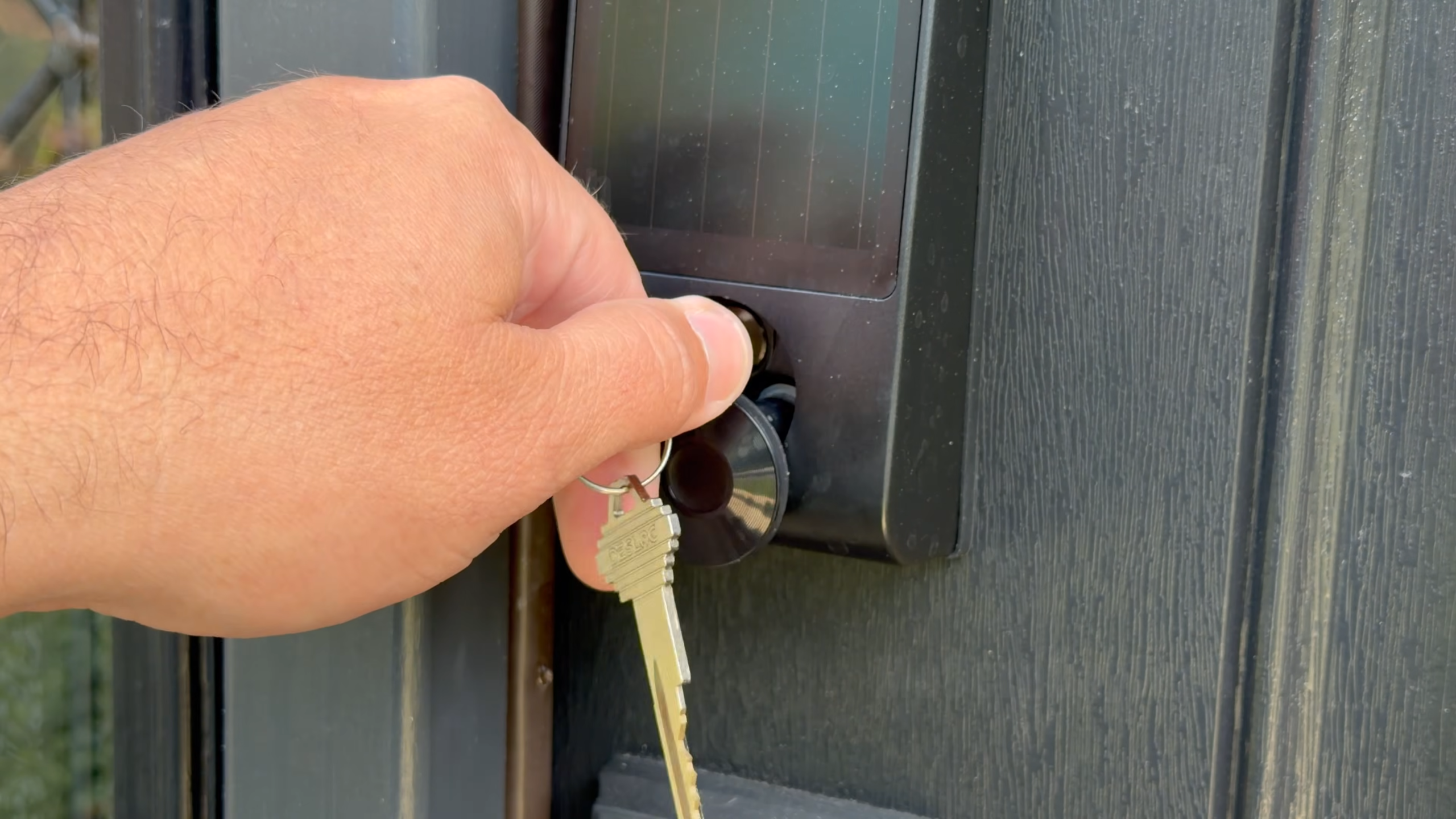
- Need a physical key cylinder as your fallback
| Solar panel | 4.8-inch perovskite, generates from 300 lux |
|---|---|
| Battery | 10,000 mAh, 6+ months with no solar |
| Unlock speed | Fingerprint as fast as 0.15 sec |
| Capacity | Up to 50 faces / fingerprints |
| Weatherproofing | IP65, tested -22°F to 158°F |
| Connectivity | Wi-Fi + Bluetooth, Alexa & Google Home |
The Solar Smart Lock Chore Nobody Wants
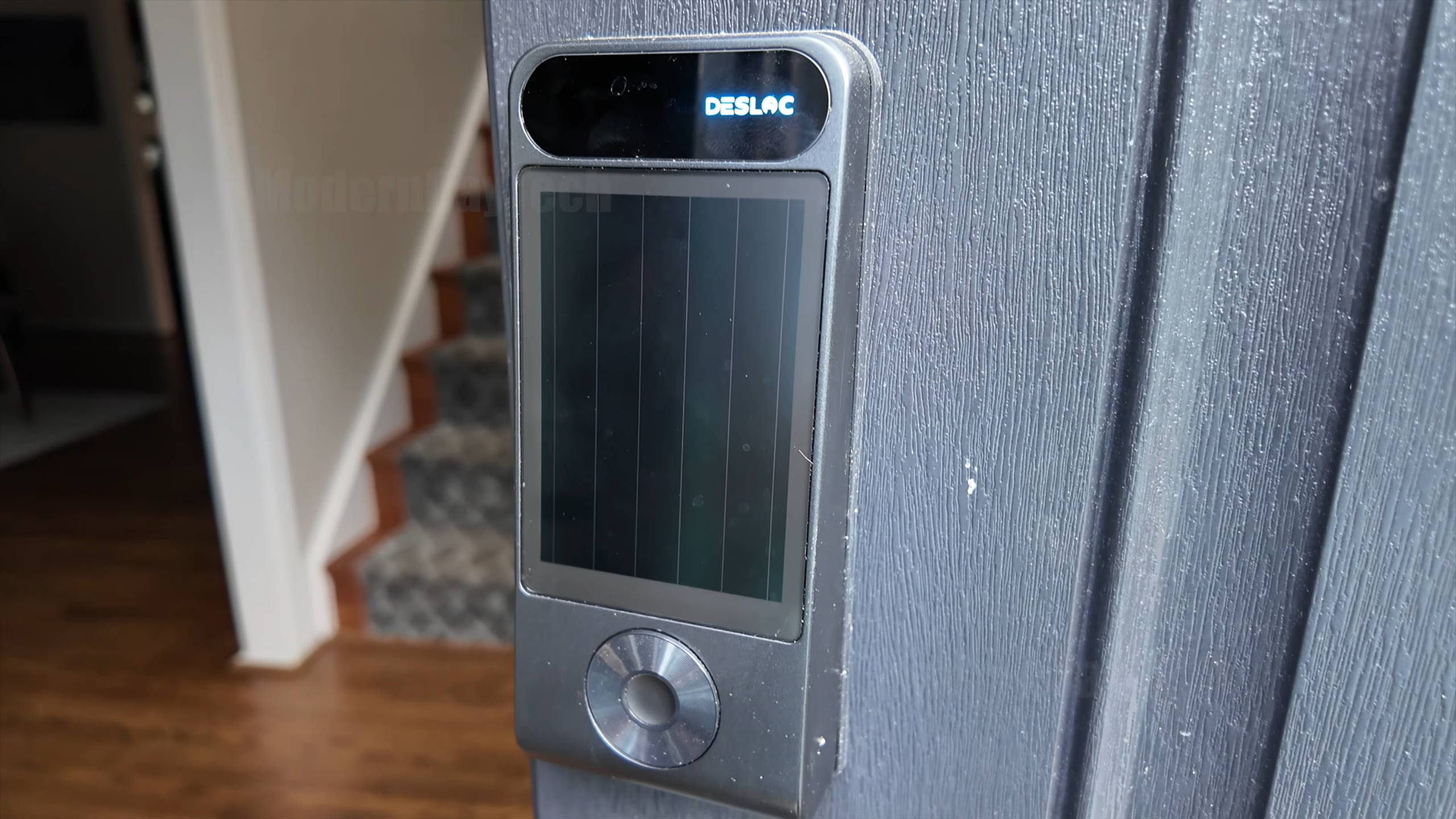
Every smart lock I’ve owned dies at the worst possible time. The Desloc V150 Plus landed on my shaded, north-facing door two months ago, and it never once asked me to charge it. It’s a solar smart lock built around a perovskite solar panel, which is a fancy way of saying it pulls power from ambient light instead of needing direct sun blasting the door all day. That single design choice is the whole pitch, and it’s what makes this lock worth talking about.
I ran it through cloudy stretches, temperature swings, and my own bad habits of wearing hats and sunglasses to the door. The short version: the charging works, the face recognition is quick, and the trade-offs are physical, not functional.
What the perovskite panel actually does
The 4.8-inch panel starts harvesting power at 300 lux, which is roughly the light level of a dim shaded porch, not a sun-drenched one. Conventional silicon panels need far brighter conditions to do anything useful, so this is the meaningful difference. Desloc claims it’s the world’s first consumer smart lock to use perovskite cells, and the practical payoff is that my shaded, north-ish doorway kept the battery topped up without me lifting a finger.
Behind the panel there’s a 10,000 mAh removable battery rated to run 6+ months even if the sun never shows up, plus a USB-C emergency port for the worst case. The exterior unit holds the solar panel, dual cameras for 3D face recognition, and the curved AI fingerprint sensor. The interior holds the battery, the lock motor, and the brains. It’s a two-part system wired through the door.
How it held up over two months of daily use
The battery never dropped to a level that worried me, which is the whole point. I deliberately tested the face recognition wearing hats and sunglasses to see how far the 3D scan would stretch, and it handled most of my everyday looks without demanding I stop and stare. When it worked, it was hands-free and quick. The fingerprint sensor is the backup I reached for most, and Desloc rates it at 0.15 seconds, which lines up with how instant it felt in practice.
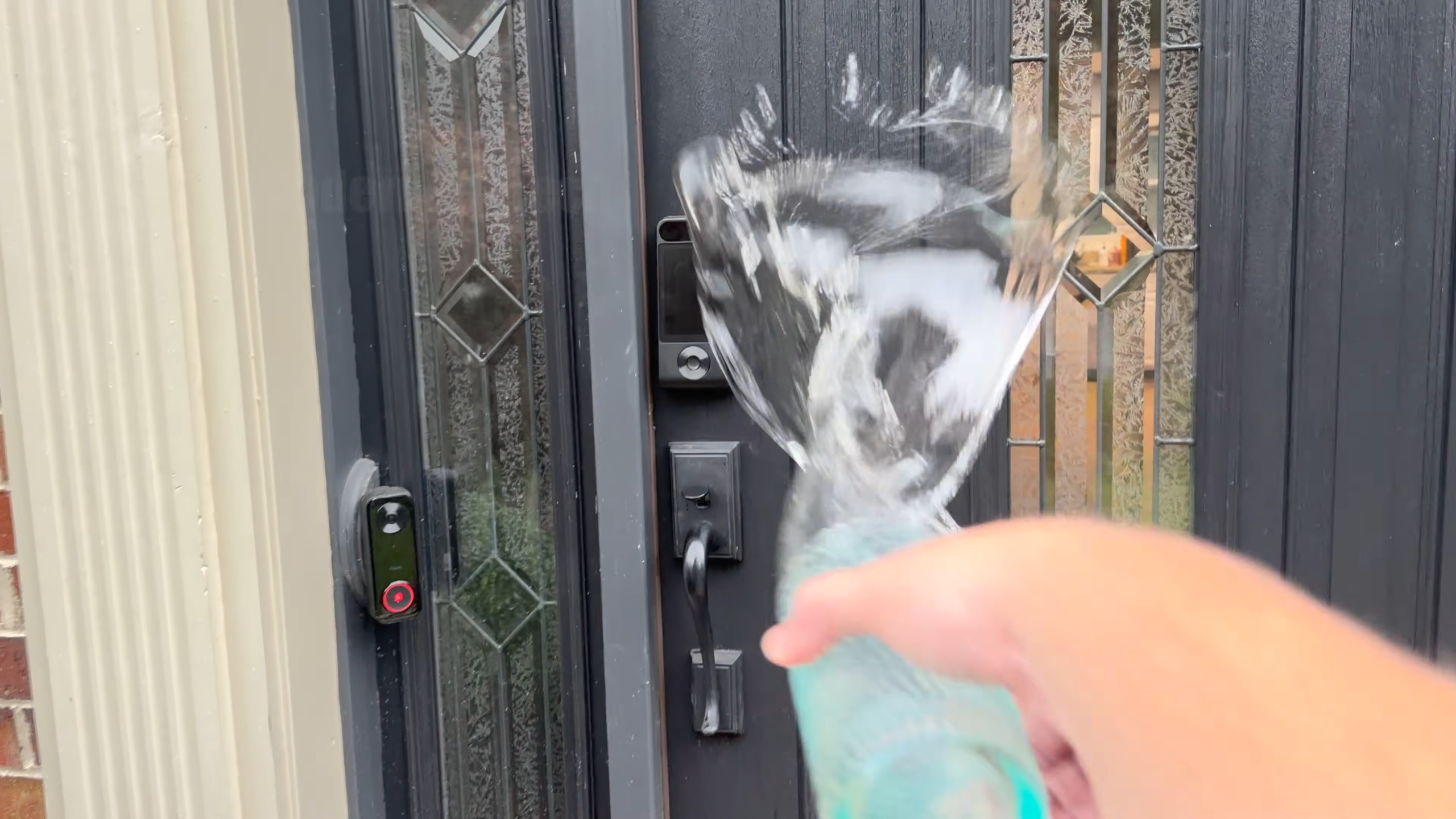
Weather was a genuine non-issue. We had a week of freezing rain in that two-month stretch and the exterior unit didn’t flinch, no lag on the fingerprint sensor, no false wake on the cameras. The Alexa and Google Home integration worked without any extra configuration, and the app’s Special Care mode is worth noting if you have kids or elderly household members who need a gentler unlock experience.
The compromise the solar panel forces
The solar panel isn’t free, and I don’t mean the price. To harvest light, the exterior unit has to sit big and flat on the door, so this is not a subtle lock. It’s a chunky two-part system, and the panel real estate is the reason. If you were hoping for a lock that vanishes into your door, this design will bug you every time you walk up to it.
There’s also the ambient-light dependency. 300 lux is a low bar, but a doorway with zero light, deep under a covered entry with no windows nearby, leans on the battery more than the sun. You’ve still got 6+ months of backup and a USB-C port, so nobody’s getting locked out. It’s just worth being clear-eyed that the headline feature does its best work where at least some daylight reaches the door.
Get it now
Desloc V150 Plus Solar Smart Lock
Get the best price on Amazon →As an Amazon Associate I earn from qualifying purchases.

Who this lock actually suits
The person this lock is built for has a specific failure mode: they ignore the low-battery alert until the lock dies on a Tuesday night with their hands full of groceries. The self-charging design eliminates that entirely. The 50-profile capacity and dual biometrics, face for hands-free arrivals, fingerprint for guests who won’t bother enrolling, make it a practical fit for busy households. Two groups should stop reading here: renters who need a physical key cylinder as their backup, and anyone whose doorway is in complete darkness, because there’s no key slot and the solar panel needs at least some ambient light to earn its keep.
Solar lock vs. a standard battery smart lock
The V150 Plus makes a specific bet: it trades a slim profile for the one thing standard battery locks can’t offer, a lock you never have to think about charging. If you’ve ever stood outside at midnight swapping AA batteries, that trade is obvious. If you want something that disappears on the door, no solar lock built around a 4.8-inch panel is going to satisfy you, and this one certainly won’t.
Advice before you mount it
Check your doorway’s light before anything else. If daylight reaches the door for part of the day, the solar side will carry most of the load and you’ll rarely think about power. Enroll a couple of face profiles, including one with your everyday sunglasses and hat on, so the 3D scan learns your real-world looks instead of just a clean studio face. And consider the WK01 keypad add-on if you want a shareable code option for guests who won’t enroll biometrics. Set your auto-lock timing in the app early so the door secures itself the way you’d expect.
Pros
- Perovskite panel harvests from 300 lux, so it charged fine on my shaded door
- Two months of daily use with zero manual charging
- Fingerprint unlock at 0.15 sec felt instant every time
- Face recognition handled hats and sunglasses better than expected
- IP65 and a -22°F to 158°F range meant weather was a non-issue
Cons
- The exterior unit is bulky, since the solar panel needs surface area
- A doorway with truly zero ambient light leans on the battery, not the sun
- No physical key cylinder, USB-C is the emergency fallback
- The keypad for guest codes is a separate paid add-on
What we’d improve
A couple of things the next version could tighten up:
- The bulk of the exterior unit, the solar panel earns its size, but a slimmer housing or a lower-profile panel layout would make this an easier sell for people who care how the door looks.
- Bundling the keypad, the WK01 keypad as a separate add-on feels like it should ship in the box for anyone who wants a simple guest code option.
Frequently Asked Questions
Does the Desloc V150 Plus work with Alexa and Google Home?
Yes, it supports both Amazon Alexa and Google Home over Wi-Fi and Bluetooth. That covers voice control and integration into an existing smart-home routine.
Do I need an app or subscription to use it?
You’ll want the app for setup, remote access, auto-lock timing, and the Vacation, Rest, and Special Care modes. There’s no subscription mentioned to use the core lock features.
What happens if the solar panel doesn’t get enough light?
The 10,000 mAh backup battery is rated to run 6+ months with no solar input at all. A doorway with zero ambient light just draws down that battery faster, and there’s a USB-C emergency port as a last resort.
Can it unlock if I’m wearing sunglasses or a hat?
In my testing it handled hats and sunglasses in most everyday cases. Enrolling a face profile while wearing them helps the 3D scan recognize your real-world looks more reliably.
How many people can it store?
Up to 50 fingerprints and faces total. That’s plenty for a family plus regular guests, and the fingerprint sensor adapts to your print over time.
Is there a way to give guests access without enrolling them?
There’s an optional WK01 keypad add-on that gives you a code entry option for guests. It’s sold separately, so factor that in if code access matters to you.
Will it survive cold winters and hot summers?
It’s IP65 rated and tested from -22°F to 158°F, so extreme cold and heat shouldn’t be a problem. Rain and snow didn’t affect mine once it was mounted.
Does it meet a security standard?
It meets ANSI/BHMA Grade 3 standards. The 3D face recognition also includes liveness detection, which is meant to resist photo-based spoofing.
How hard is the installation?
It’s a two-part system with an exterior and interior unit wired through the door, so it’s a standard smart-lock install rather than a plug-and-play swap. Plan for basic tools and a bit of time to route the connection and align both halves.
Clicking takes you to the seller's website. We may earn a small commission if you purchase, at no extra cost to you.
Get it now
Desloc V150 Plus Solar Smart Lock
Get the best price on Amazon →As an Amazon Associate I earn from qualifying purchases.